
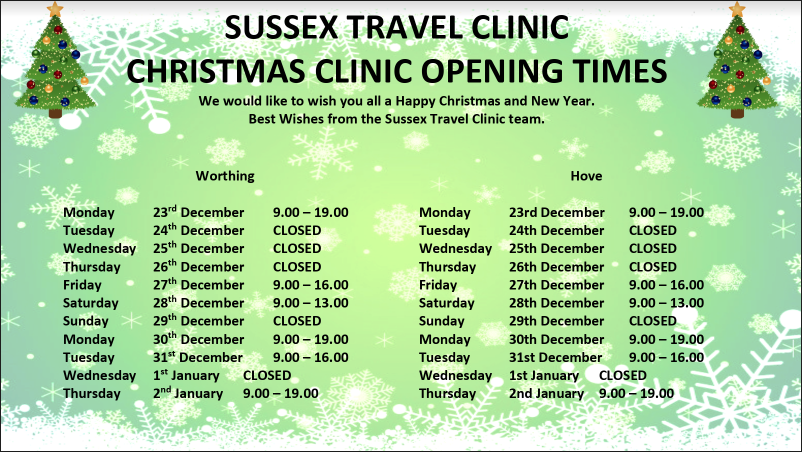
Download our Christmas Opening Times 2019

Travellers’ diarrhoea can be very unpleasant and ruin a holiday or business trip. It is a common problem, 20-60% of all travellers will experience a bout of travellers’ diarrhoea when they travel to high risk destinations, particularly those visiting low to middle income countries.
20% of travellers are confined to bed for a couple of days, and 40% have to change their travel plans, and 1% are admitted to hospital (1), so you can see it can be very disruptive!
The organisms responsible for travellers’ diarrhoea are commonly reported worldwide, but there are some areas in the world that are higher risk. These include most of Asia, Africa, Middle East and Latin America, and more than 20% of travellers may experience travellers’ diarrhoea in these destinations.

Source: Health Protection Agency. Foreign travel-associated illness – a focus on travellers’ diarrhoea. 2010 report (2)
Travellers’ diarrhoea is defined as 3 or more loose stools per day. They are often accompanied by at least one of the following symptoms:
Most cases of travellers’ diarrhoea occur in the first week of travel.
Typically, symptoms last for 3-5 days and most cases get better without any specific treatment.
Mild travellers’ diarrhoea – typically not accompanied by other symptoms and does not generally disrupt your normal activities or significantly alter your travel activities.
Moderate to severe travellers’ diarrhoea – generally accompanied by other symptoms and your normal activities are generally disrupted – 3% of travellers have 10 + stools a day!
Travellers’ diarrhoea can be caused by many different organisms.
Bacteria – E. coli, Salmonella, Campylobacter, Shigella, Cholera
80% of all cases of travellers’ diarrhoea
Viruses – Norovirus, Rotavirus
5-10% of all cases of travellers’ diarrhoea
Parasites – Giardia, Entamoeba histolytica, Crytosporidia, Cylospora
2-10% of all cases of travellers’ diarrhoea –More likely in individuals with symptoms that last more than 2 weeks
All these organisms are spread by the following:
Stress, change in diet and increased alcohol consumption can also cause travellers’ diarrhoea.
This is tricky! Travellers’ diarrhoea is difficult to prevent if you are not preparing your own food and drinks, but there are some things that you can do to help.
Always remember that food that is freshly made, cooked carefully and served when hot is usually safe. It is best to avoid food that has been standing around for any length of time.
If you’re going to eat ‘street food’ always try to choose food that is freshly cooked to a high temperature and is served to you immediately whilst it is still hot!
 Did you know that the humble watermelon can be dangerous?
They can be ‘injected’ with pink water to make them look more tempting when they are cut! Best to avoid the watermelon seller on the beach!
Unopened carbonated, commercial fruit, water and pasteurised drinks that have been manufactured in a factory can be considered safe to drink. Also drinks that are made with boiling water such as coffee and tea are generally safe.
This is a good question, there are a variety of ways you can do this.
Boiling it – it is a reliable way to disinfect your water but it is not always easy to do.
Chemical treatments – the effectiveness of these treatments can vary. Always follow the manufacturer’s instructions carefully. Chlorine based preparations are normally the most safe and effective way to chemically treat your water. Iodine is no longer recommended (EU directive 2009). (3)
Filtering it – this is useful for very remote travellers who only access to water from rivers and streams, the filter remover the particulate matter. There are lots of filters on the market.
UV light – battery operated UV light devices can be used to disinfect water. The water needs to be clear of particles before treating.
We sell the Aquapure Traveller filter bottle in Sussex Travel Clinic. It uses Mechanically Advanced Disinfection (MAD) technology which is based on electro adhesion that eliminates nearly 100% of bacteria, viruses, larger pathogens and many chemicals, heavy metals, dirt and odour in water.
Bottle feeding babies – it is generally not recommended that you make formula feeds for babies with bottled water because they can contain too much salt (sodium/Na) and is probably not sterile. However when you are travelling this may be a safer option than using tap water. If you do use bottled water check the label make sure is contains < 200mg/l of sodium and up to 25mg of sulphate. Avoid mineral water as it generally exceeds these levels. Look out for unsealed bottles or ones that look like they have been tampered with. It is recommended that bottled water is boiled and allowed to cool before you make up infant formula. Another alternative is to take ready-made formula with you on your trip. (4)
Reduce your risk of getting travellers’ diarrhoea by taking BIMUNO
 This is a pre-biotic that helps to reduce your risk of travellers’ diarrhoea by introducing special nutrients called oligosaccharides into your gut thus resetting and increasing friendly gut bacteria.
Just start taking it daily for one week before you travel and every day you are away on your trip! We sell this at Sussex Travel Clinic.
Pepto Bismol
Bismuth subsalicylate can help to reduce nausea and can be recommended for mild diarrhoea. Bismuth subsalicylate preparations are available over the counter for use in adults and children over 16 years of age (5)
Antibiotic self-treatment is unnecessary for majority of travellers and are not routinely recommended. However they may be considered for those at high risk.
Travellers suitable for self-treatment may include:
Travellers’ diarrhoea packs can be purchased at Sussex Travel clinic. All kits are designed for self-treatment of travellers’ diarrhoea and contains full instructions.
12 years old and over only
Handy bag containing the following items:
Cost Per Pack – £15.00
Antibiotics may be recommended by your nurse if you are more at risk from travellers’ diarrhoea during your travels
Over 18 years only
Handy bag containing the following items:
Cost Per Pack – £20.00
Over 18 years only
Handy bag containing the following items:
Cost Per Pack – £20.00
If you are still experiencing symptoms when you return from your trip and they are not improving you should see your doctor. Seek urgent medical care if you have the following symptoms:
Children and the elderly are more vulnerable and medical advice should be sought earlier if fluids cannot be tolerated or there signs of dehydration.
To book an appointment to discuss travellers’ diarrhoea or purchase a travellers’ diarrhoea pack please call the clinic on 01273 749100 or 01903 254774 or book ONLINE
Happy travelling from the team
1 Ericsson CD. Travelers’ diarrhea. Epidemiology, prevention, and self- treatment. Infect Dis Clin North Am 1998; 12: 285–303 cited in Al-Abri, S.S. Beeching, N.J. Nye F.J. Traveller’s diarrhoea. Lancet Infect Dis. 2005 Jun; 5 (6):349-60.
2 Foreign travel-associated illness: a focus on travellers’ diarrhoea – http://webarchive.nationalarchives.gov.uk/20140714084352/http:/www.hpa.org.uk/ webc/HPAwebFile/HPAweb_C/1287146380314
3 Fit for Travel – http://www.fitfortravel.nhs.uk/advice/disease-prevention- advice/travellers-diarrhoea.aspx
4 NHS Choices. Can I use bottled water to make up baby formula (infant formula)? 22 June 2016. [Accessed 18 August 2016].
5 Nathnac – http://travelhealthpro.org.uk/factsheet/53/travellers-diarrhoea
Bibliography:
Food Standards Agency, UK. The Natural Mineral Water, Spring Water and Bottled Drinking Water Regulations 2007. [Accessed 18 August 2016]
Nathnac – http://travelhealthpro.org.uk/factsheet/53/travellers-diarrhoea
TRAVAX – http://www.travax.nhs.uk/health-information/general-health-advice/travellers-diarrhoea.aspx

Sussex Travel Clinic would like to wish all of our customers a Happy Christmas. Here are our opening hours over festive season.
Ticks are tiny little blood suckers. Sometimes they can be difficult to spot, they can be as small as a poppy seed! After having a feed, adult ticks can swell up to the size of a small pea and become much lighter in colour.

They can infect you with Lyme disease, Tick Bourne Encephalitis, Rocky Mountain Spotted fever and Crimean-Congo Haemorrhagic Fever.
Rural travellers in tick risk areas, countryside workers, children, hikers, gardeners, campers and outdoor athletes.

The castor bean tick (Ixodes ricinus)
They live in the soil and emerge to climb tall grass shrubs, bushes and low level tree branches, where they wait for their next victim. This means they can be found in gardens, woodland and meadows and dunes.
Ticks can’t jump or fly they normally hitch a lift and become attached to skin or clothing after brushing against the bracken or long grass, they then wander off to warm moist areas of the body such as groins, armpits or backs of knees to have a meal. You won’t feel the bite because the tick injects a toxin that anesthetises the area.
Tick season in the UK is normally March to October during the warmer months

Lifesystems Deet 50+
DEET has been proven to be the most effective preparation in preventing ticks.
DEET has been used as an insect repellent for around 50 years and it is available in different concentrations. 50% concentration is recommended.
DEET can be used for children over the age of 2 months. For children, use clothing as the main barrier and repellent on any remaining exposed areas of skin.
If you are taking a baby under two months travelling to countries with risks ticks get expert advice about suitable repellents.
It can be used in pregnancy and breast feeding women.
If you are using sunscreen, it is advised that repellent must be applied after sunscreen. Choose a high factor sunscreen as DEET can reduce the effectiveness of the SPF. Always wait for half an hour after applying sunscreen before applying DEET.
Remember to remove repellent with soap and water when it is no longer needed.
Do not spray directly onto faces, spray on hands first and then apply to face. Wash hands after applying to prevent contact with lips and eyes.
Never use on cuts, abrasions or irritated skin.
 You could use a natural insect repellent as an alternative to DEET.
Sussex Travel Clinic now stocks the new Care Plus Anti-Tick repellent which contains a powerful Citriodiol®-based formula, this natural Anti-Tick repellent offers up to 6 hours protection per application, and can be used on anyone over 3 months of age, this makes it an excellent product for children and families.

Protecting Against Ticks by Tucking Pants into Socks
Clothes are your best protection. Try to wear long trousers and tuck them into your socks, not an attractive look I know, but vital.
You could consider wearing bug socks that are manufactured with impregnated insect repellent.
It’s a good idea to treat your clothing using an insecticide spray that contains permethrin (an insecticide that kills insects on contact) this should only be used on clothing NOT your skin.
After you have been outdoors, check your body regularly for ticks. It’s a good idea to have a ‘tick buddy’ who can help you check difficult to reach areas!
Carry a tick remover or fine tipped tweezers so that ticks can be safely and easily removed. You should always try to remove ticks as soon as possible, preferably within eight hours.
How a tick is removed is really important. Incorrect tick removal can result in:

Care Plus Tick Remover
Tweezer tick-removal technique
1) Grasp the tick as close to the skin as possible and pull upwards with steady, even pressure.
Do not twist or jerk the tick as this may leave its mouth parts embedded in the skin, or cause it to regurgitate disease causing fluids. If any mouth parts do break off, you can remove them with a sterilised needle or tweezer points.

There are quite a few tick-removal tools on the market.
It is important to remember when choosing your tool that the most important points of tick removal are:
Sussex Travel Clinic currently stocks the Care Plus Tick remover.
After removing the tick, it’s a very good idea to wash your hands and the affected area with soap and water, then treat the bite area with an antiseptic.
The best way to dispose of a tick is by crushing it and flushing it down the toilet or wrap it in a tissue and throw it into a dustbin. Be aware that engorged ticks will contain potentially infected blood, which may splatter when crushed. Do not crush the tick with your fingers and do not allow the crushed tick or the blood it was carrying to come into contact your skin.
It is best not to let the tick go when you remove it as it can then go on to lay more eggs or bite someone else!
 Did you know that approximately 3,000 people in the UK contract Lyme disease (Borreliosis) from tick bites every year and that Lyme disease is more common than previously thought?
Fifteen percent of cases that are diagnosed in the UK are contracted abroad, generally from east coastal states in North America and in Europe, especially northern European countries and Scandinavia.
In the UK, known risk areas include Exmoor, the New Forest, the South Downs, the Lake District, the Yorkshire moors and many rural areas in Scotland, notably the Scottish Highlands. It may occur elsewhere in the UK.
You need to act quickly after suffering from a tick bite. If you wait for the first signs of illness, the disease can already have become chronic. Always seek advice from your doctor if an inflamed red ring appears around the bite which looks a little like a bull’s eye target; or if you have any symptoms such as joint and muscle pain, fever, headache and tiredness. All these symptoms could indicate that you have been infected with Lyme disease.
Early diagnosis and treatment reduces the risk of complications of the disease. Lyme disease is diagnosed with a blood test and is treated with antibiotics.
This tick test lets you find out immediately after the bite whether the tick carries the bacteria that causes Lyme disease. The tick test produces a result within 20 minutes. If the result is positive, your doctor can start treatment immediately. The earlier you start treatment, the more effective it will be.
Tick-borne Encephalitis (TBE) is spread by tick bites. It is a serious infection of the brain and vaccination is advised for those in risk areas unable to avoid tick bites such as campers, forestry workers and ramblers.
Tick-borne Encephalitis is present in many countries worldwide. There are 3 main subtypes of Tick-borne Encephalitis that are found in the following locations:
European/Western – Europe to Russia
Siberian – Urals, Siberia, far Eastern Russia, Finland
Far Eastern – far Eastern Russia, China and Japan
Initial symptoms of TBE are similar to flu and can include, a high temperature, a headache, tiredness and muscle pain
These symptoms typically last for up to eight days, after this most people get better.
However, some people go on to develop more serious symptoms, such as meningitis or encephalitis.
Second-stage symptoms:
This is a medical emergency and would normally require admission to hospital. There is no treatment for TBE. Most people will slowly get better over a period of time, but it could take months even years to fully recover. Some people are left with long term complications from the disease. Approximately one in every 100 cases of TBE is fatal.
Travellers to TBE risk countries should consider having the vaccination before departure
Vaccine Schedule
3 doses – Day 0, 1-3 months later and 5- 12 after the second dose.
Or if short of time before departure the following schedule can be offered:
3 doses – 0, 14 days, 5-12 months after the 2nd dose
Booster – 3 years after a primary course as above, then every 3-5 years.
Children – can be given to children aged 1 year and over
Written by Nicki Harrison- RGN- Lead Nurse
Useful resources
Please see the following advice for more information on Tick Bourne Encephalitis:
References and Bibliography:
http://www.lymediseaseaction.org.uk/
http://www.bada-uk.org/tick-control/tick-control-domestic-environment
http://travelhealthpro.org.uk/tick-borne-encephalitis/
http://www.fitfortravel.nhs.uk/advice/disease-prevention-advice/tick-borne-encephalitis.aspx
http://www.masta.org/tickalert/
https://www.gov.uk/government/collections/immunisation-against-infectious-disease-the-green-book
http://www.nhs.uk/Conditions/Tick-borne-encephalitis/Pages/Introduction.aspx

Planning a holiday when you’re pregnant? Great! As long as there are no identified complications or concerns with your pregnancy, following the proper precautions and gaining information on when to travel, vaccinations and malaria advice, it is generally safe to travel at all times during your pregnancy.
Choose your holiday destination wisely. Some locations may carry extra risks and could require vaccinations and may have a high risk of malaria.
Destinations with a high risk of malaria or other mosquito-borne disease, such as dengue or zika should be avoided when pregnant.
Zika advice when pregnant or trying to conceive.
Seek advice early from your doctor or midwife, at least 6-8 weeks before your trip. If you have less time than this before you go, an appointment is still worthwhile. They can advise you whether it is safe for you to travel.
The early pregnancy scan that is usually performed between 10 to 13 weeks gestation, should ideally be done prior to your trip to confirm the viability of the pregnancy, exclude ectopic pregnancy and assess the gestation. It is also a good idea that you know your blood group before departure. You should be aware that the blood supply may not be safe in some countries, there may be a risk of blood-borne infection. Consider joining the Blood Care Foundation, members can have access to screened blood worldwide for use in an emergency. You can become a member at Blood Care Foundation
Travelling with certain pre-existing medical conditions or pregnancy complications (past or current) is not recommended, specific advice should be sought from your obstetrician and midwife.
You should take your ante-natal records and next of kin details with you when travelling.
Suitable gynaecological, obstetric and neonatal care may be limited or non-existent in some areas. Emergency plans should be made before you travel. It is a good idea to find out what healthcare facilities are at your destination in case you require urgent medical attention. The Foreign and Commonwealth Office (FCO) website provides advice on availability of medical treatment/facilities and any travel warnings on an individual country basis.
Don’t forget that misunderstandings due to language barriers or cultural problems might make communication and treatment more difficult than it would be when you’re at home.
Comprehensive travel insurance is essential for all travellers, particularly when pregnant. You must make a full declaration of any medical conditions, including pregnancy to your insurers. Pregnant women should check that the policy will cover the cost of medical treatment if a pregnancy related problem occurs, this should include the care of a pre-term baby and repatriation costs if applicable. You should also make sure that all equipment and planned activities will be covered by your policy.
Further information on travel insurance visit Fit For Travel
The best time to travel is in your second trimester. In most cases, feelings of nausea and extreme tiredness will have passed by the end of the first trimester. The risk of miscarriage is also higher in the first three months, whether you’re travelling or not. Travelling in the last months of pregnancy can be tiring and uncomfortable.

If your pregnancy is uncomplicated, flying is not harmful for you or your baby. Before you book your tickets, check with your airline and insurance company that they will allow you to travel while pregnant. Women with high-risk pregnancies, which include abnormalities of the placenta or increased risk of premature labour, should avoid flying.
The safest time to fly in your pregnancy is:
Single baby pregnancy – before 37 weeks.
Uncomplicated twin pregnancy – Before 32 weeks.
The likelihood of going into labour is naturally higher after these times (1).
Most airlines do not allow women to fly after 37 weeks. It is important that you check with your airline before flying. Remember to factor in the date of your return journey (1).
After week 28 of your pregnancy, your airline may ask for a letter from your doctor or midwife confirming your due date, and that you aren’t at risk of complications (1)
When you are pregnant and for up to six weeks after the birth of your baby long-distance travel (more than four hours) carries an increased risk of developing a blood clot, otherwise known as deep vein thrombosis (DVT). A DVT is a blood clot that can form in your leg or pelvis. If it travels to your lungs it can be life threatening. When you fly, drink plenty of water and move about regularly – every 30 minutes or so. Wear graduated elastic compression stockings – your midwife or doctor will need to provide the correct size and type for you as they are different from standard flight socks that you buy from a pharmacy. Your doctor or midwife may advise you take other medication if your risk is high.
The Royal College of Obstetricians have produced an excellent information sheet on Flying in Pregnancy
Some cruise liner companies or ferry companies may decline to carry pregnant women in the mid to late stages of their pregnancy. You should check your individual liners company requirements when booking and also take into account any connecting flights. It’s a good idea to find out if there are on-board medical facilities to deal with pregnancy and what medical services are at the docking ports.
Pregnancy does not prevent a woman from receiving vaccines that are considered safe and will protect her health and that of her unborn baby. Most inactivated vaccines are considered safe in pregnancy and can be used if the risk of infection is high and both the mother and the baby would be in serious danger if she were to contract infections such as such as typhoid and hepatitis. A careful risk assessment will be made by your healthcare professional and a joint decision would be made with you whether vaccinations are recommended.
Vaccines that use live bacteria or viruses are not recommended during pregnancy because of concerns that the virus or bacteria in the vaccine could potentially infect the baby in the womb. However, the use of live vaccines in pregnancy may be appropriate if the woman’s travel is unavoidable and the risk of the disease is high. Lives vaccines would include Yellow Fever and MMR vaccinations.
It is recommended that women do not travel to known malaria risk areas when pregnant. You should consider postponing your trip, unless it is essential. Malaria carries serious risks for both you and your unborn baby.
Pregnant women are more attractive to mosquitoes and are therefore more likely to get a severe form of malaria. It is very likely that you would develop severe complications from malaria. Malaria in pregnancy increases the risk of miscarriage, premature delivery, low birth weight and maternal or neonatal death. It can also be very difficult to diagnose malaria in pregnancy.
If you are travelling to malaria risk areas it is essential that you are aware of your increased risk and advice is sought about the safest malaria prophylaxis medication available.
The Royal College of Obstetricians have produced an excellent information sheet on Malaria and Pregnancy
As with all travellers, bite prevention is crucial in the prevention of malaria, and other mosquito borne diseases. The use of insect repellents is essential. DEET should not be used in concentrations higher than 50% during pregnancy.
Mosquito bite avoidance advice sheet
Travellers’ diarrhoea is a common concern when travelling abroad. This can affect up to 50% of travellers and can lead to dehydration. Ensure you drink plenty of bottled water, or use canned juices or soft drinks as an alternative. Always check that dairy products are pasteurised. Fruit should be peeled. Salads should be avoided as could be contaminated with soil or washed with local water. All vegetables should ideally be cooked. Fish and shellfish are best avoided. Some medicines for treating stomach upsets and traveller’s diarrhoea aren’t suitable during pregnancy.
If you are pregnant and planning a trip we recommend that you book an appointment to discuss your trip with one of our nurses at our clinic.
To book an appointment call 01273 749100 or 01903 254774 or book ONLINE

3. http://www.nhs.uk/chq/Pages/927.aspx?CategoryID=54&SubCategoryID=133
4. http://www.nhs.uk/Conditions/pregnancy-and-baby/Pages/travel-pregnant.aspx
6.http://travelhealthpro.org.uk/pregnancy/
7.http://www.nhs.uk/Conditions/zika-virus/Pages/Introduction.aspx

Nurse giving child injection in arm
Having vaccinations can sometimes be a very scary thing for kids and parents. A little bit of preparation can help to ease your child’s fear and will also minimize the anxiety for both of you.
Whatever the child’s previous experiences of a healthcare setting are, a visit to clinic can be not only a challenge, but also potentially frightening and very traumatic for them.
Don’t underestimate the importance of preparation. An unprepared child is a frightened and anxious child. I have been a children’s nurse for many years and have worked in lots of acute settings where I have had to help children overcome their fears during procedures and have witnessed first-hand how important preparation is.
A well-prepared child is less likely to suffer long-term emotional effects, which in turn will make any following visits to a healthcare setting a more positive experience for them.
According to the National Association of Hospital Play Staff (NAHPS, 1987): “Over the years, several controlled studies have been completed and they show that well-prepared children suffer less emotional trauma post procedurally than children who have had no preparation.”
Play preparation helps to improve the child’s ability to cope. It can also give the child some control over the situation, allowing them to participate and possibly make some of their own choices. For example which limb will be used for the injection or who they will sit with?
About a day or so before the appointment talk to your child about the injection. Answer your child’s questions honestly and use a straightforward approach. Use plain language that is age appropriate. Discuss the importance of having the injection and how it will help to keep them well. Remember they may need to have more than one, so don’t promise that it is just one needle.
Explain what is expected of your child, that the injection will hurt a little but not for very long. Help your child to choose clothes that are easy to remove because the nurse needs give their injection in their arm. Babies under 12 months of age are given vaccinations into the leg. You may want to start taking off layers before you go into the clinical room to see the nurse.
Try to avoid telling scary stories about injections or making threats about having to have injections if they are not behaving.
We can provide numbing cream or you can call it special ‘magic cream’ called Emla. That can be applied to both arms 1 hour before your child’s appointment. Please call reception to arrange collection of a pack. Emla Packs cost £8 and come with full instructions of use. You can explain that it can help to make the injection hurt less.

You could show your child the syringe used for the injection. You can obtain an oral syringe from a pharmacy for a small cost. Using toys to practice on can help to explain and help to lessen fear.
You could look at a book or pictures that show children who are having an injection.
You could watch a TV programme about injections. CBeebies has a great programme called Get Well Soon with Dr Ranj it is based on children’s experiences of going to the doctor. It features puppet characters that come to visit the doctor and through them children get to learn about common health issues.
We can’t promise we can make balloon models but we do have stickers and certificates though!
Allow plenty of time to get to your appointment.
It is natural to be worried when your child is having a vaccination. Try to stay calm and treat the situation in a rational way. If you’re anxious, your child may pick up on this and also become anxious and distressed. If you’re calm then your child will be too.
It is best to sit your child on your lap and cuddle them firmly, the nurse will show you how to hold them. Holding a child close to you helps to keep them calm. Smile and make eye contact with your child, let them know everything is OK and they are safe.
It is better if the injection is given quickly, your child won’t even see the needle or notice that anything has happened. If you’re nervous about seeing your child having an injection, it is better to bring someone else with you that the child knows who can hold the child for you.
Distraction helps during the injection. You can get your child to take a deep breath and pretend to blow bubbles or count. You could use a favourite toy or book or talk about something else to take their mind off the injection.
It is best not to apologise for subjecting them to the injection as it may make the child think that the injection is worse than it is or it is a punishment and will make them feel more anxious.
Comfort your child if he or she cries, and say it’s ok to cry, it doesn’t mean that they are not being brave. Try not to tell a child they are not “being brave” if they cry.
Give loads of praise and cuddles. We’ll be ready with stickers and certificates. You may want to bring a reward for them to have. Or take them somewhere nice afterwards for being so brilliant!
The best way to keep children calm is to have one adult reassuring the child having the injection and, ideally, a second adult with the other children in the waiting room. So it is always best to try to bring another adult with you to the appointment to help out. Children will be happier left in the waiting room with someone that they know.

Please try to complete the registration form and medical history form before you come, it helps to speed up the appointment for you and your child.
Please bring your child’s red book with you, so that the nurse can record your vaccine in the book.
We look forward to seeing you at the Sussex Travel Clinic soon.
National Association of Hospital Play Staff (1987) Let’s Play: Play Preparation for Surgery and Unpleasant Procedures. NAHPS, Middlesex
http://www.nhs.uk/conditions/vaccinations/pages/vaccination-appointment-tips-for-parents.aspx

Rabies is a virus transmitted through the saliva of infected animals. It can be spread to humans if an infected animal bites or scratches the skin, or licks an open cut. Once symptoms have manifested, rabies is nearly always fatal.
Rabies can be carried by any living mammal, but dogs are the source of the vast majority of human rabies deaths.

In the UK, we seldom hear about rabies, but latest estimates put the global death toll at close to 60,000 human deaths every year. (1)
Each year more than 15 million people worldwide seek treatment following rabies exposure. (2) More than 1000 people in the UK each year seek rabies post-exposure treatment (PEP). Most of these are travellers who seek this treatment on return to the UK. Contact with dogs has shown to be the commonest exposure that results in PEP, this is closely followed by contact with cats, monkeys and bats. (3)
The recent Public Health England report highlighted that “since 2000 there have been five human deaths from rabies in UK citizens; four of these in travellers following exposure in rabies endemic countries, and the fifth in a bat handler infected in Scotland. None of these individuals had received post-exposure prophylaxis.” (3)
A study of travellers who had a high risk bite injury in Africa and Asia showed that only 24% received both post exposure rabies vaccination and immunoglobulin in the country they were visiting. Many travellers have to return home to complete or obtain the full course of rabies post exposure treatment. (4)

In another study of backpackers travelling to Thailand it showed that 4% of them had a potential exposure from dogs that appeared healthy, and only a few knew about the transmission risks from bites, scratches and licks to broken skin. Only a very small percentage of this group had pre-exposure rabies courses before travel. (5)
Travellers may not always be aware of the poor availability of post exposure rabies treatment when travelling, particularly in Africa and Asia. It may not always be possible to complete a full World Health Organisation (WHO) recommended post exposure schedule in these countries.
So for travellers a bite from a dog or contact with monkeys, cats or bats becomes a worrying race against time to access life-saving post exposure treatment within 24 hours of the bite/scratch or lick to broken skin. Even a delay of a few days before receiving post exposure treatment can be deadly.
False – It is a good idea not to go near dogs or animals in countries where rabies is present. However, in most circumstances exposure to rabies is a result of an unprovoked attack.
If you are in a country with rabies and are bitten, scratched, licked on open skin (a cut or open eczema) or an animal spits in your face you are at risk of rabies and should seek medical advice immediately (preferably within 24 hours).
Never assume in a rabies risk country that the contact animal isn’t infected.
True – if you get bitten you should go straight to hospital. However, in many countries rabies treatment and vaccines are in short supply. In some countries there have even been counterfeit rabies vaccines administered.
It’s important that you know what post exposure treatment you should expect to receive. Studies have shown that local understanding and knowledge of rabies post exposure treatment can be sketchy and very limited. Travellers should not automatically accept the word or advice of local non-medical trained staff about what to do after possible rabies exposure.
If you have had pre-exposure rabies vaccinations, it is a good idea to take a copy of this vaccination history with you, so that you can show this to the hospital or clinic that you are attending for your post exposure treatment. Vaccine brands are interchangeable and don’t need to be the same as the ones you have already had.

False – rabies vaccinations are no longer given in the stomach and haven’t been for a considerable amount of time. They are generally given into a muscle in the upper arm. If you require HRIG this may be injected around the site of the wound depending upon the risk of the rabies contact.
Having the rabies vaccine before you travel just gives you more time to get to hospital if you are bitten.
False – it gives you antibodies. Receiving the pre-exposure vaccine also ensures that the follow up vaccines will work straight away, as your immune system has already produced antibodies to rabies. You must still get to hospital as soon as possible within 24 hours.
The best way to prevent rabies is to have the pre-exposure course of the vaccine before you travel. You still need to get post exposure treatment after animal contact but because your body has already produced antibodies, when you complete the course of vaccine you can have peace of mind that you will not get rabies. There have been no reports of any travellers who have received a pre-exposure course ever dying following exposure to the rabies virus.
Three doses given on Day 0, Day 7 and Day 21 or 28
Booster – every 10 years or if bitten, scratched or licked on an open wound when travelling.
Children – can be given to infants and children of any age
Cost Per Dose
£52.00 ( ID) or £80.00 (IM)
Watch this video produced by Jane Chiodini – Travel Nurse Specialist to see the benefits of having a course of rabies vaccine before you travel.
Sussex Travel Clinic does not routinely offer post exposure rabies treatment. If you have had a rabies exposure when travelling and need to complete a course of rabies vaccine on return to the UK, you can get rabies post exposure treatment free of charge via the NHS. You should contact your NHS GP as soon as possible and tell them that you have had a rabies exposure when travelling. Your GP will be able to access advice and vaccines from the Rabies Reference Laboratory. If you do not have an NHS GP then you can access the same advice and treatment via your local A & E department.


To book a course of rabies vaccinations please call the clinic on 01273 749100 or 01903 254774 or book ONLINE
Hampson K. et al. (2012) Estimating the Global Burden of Endemic Canine Rabies.
http://www.ncbi.nlm.nih.gov/pmc/articles/PMC3459869/
Green Book – Immunisation against infectious disease
Public Health England (2015)
(https://www.gov.uk/government/publications/health-protection-report-volume-9-2015/hpr-volume-9-issue-35-news-2-october)
(Ridding the world of rabies Sarah Cleaveland Adapted from Hampson et al. (2015))
Piyaphanee W. et al. (2010) Rabies Exposure Risk among Foreign Backpackers in Southeast Asia. The American Journal of Tropical Medicine and Hygiene. 82(6):1168- 1171. doi:10.4269/ ajtmh.2010.09-0699 (http://www.ncbi.nlm.nih.gov/pmc/articles/PMC3459869/)
Nathnac – http://travelhealthpro.org.uk/rabies/
TRAVAX – http://www.travax.nhs.uk/diseases/vaccine-preventable/rabies.aspx
Fit For Travel – http://www.fitfortravel.nhs.uk/advice/disease-prevention-advice/rabies.aspx
Know someone who is travelling in the near future?
Unsure of what to buy them for Christmas?
Then take a look at our guide to finding that perfect Christmas gift for that special traveller.
We sell a range of unique flips flops, which come in 5 different beautiful designs.

Gandys Flipflops
£20.00 each
Two brothers, Rob and Paul founded the Gandys Company after they tragically lost their parents in the 2004 Tsunami. As part of rebuilding their lives they created the Gandys Company so that they could help less fortunate children by donating 10% of profits to fund projects to help support children deprived of the essentials, such as education, nutrition and medication. Their mission is called orphans for orphans.
Why not buy our travel journal as the perfect gift for someone this Christmas, where they can jot down their memories from their travels. The journal also includes sections for check lists, itineraries, planning and any contacts they make along the way, as well as useful information. The journal comes with a genuine leather travel wallet.

Travel Journal
£14.99
If DEET isn’t for you then why not try our anti bug bite moisturiser Alfresco. It comes in 2 sizes, either 50ml for short trips or 200ml for those who are travelling for longer periods of time. Alfresco is as natural as can be and includes anti-bug properties which have been developed in a 300 year old research garden.

Alfresco Repellent
50ml £6.50
200ml £25.00
How about purchasing one of the 2 revitalising face masks we have on offer. Choose from the collagen infused face mask with green tea extract or the collagen infused face mask with brightening treatment to perk up that special traveller after a long flight. The 15 minute treatment rehydrates the skin and is simple to use, with no mess. These products are also suitable for all skin types.

Face Mask
£5.00 each
The AquaPure Traveller is a personal water purifier which is also a water bottle. You are able to fill the bottle from ANY water source which will provide you with safe, clear and odourless drinking water. It kills viruses and bacteria and removes parasites such as Giardia. The water bottle produces 350 litres of safe, clean, drinking water.

AquaPure Traveller
£34.99
All of these items can be brought at either our Worthing or Hove clinic. If you would like any more information about any of the products listed then please give us a call on 01273 749100 or 01903 254774.
Alternatively you can pop into either of our clinics where all of these products are on display.

Sussex Travel Clinic would like to wish all of our customers a Happy Christmas. Here are our opening hours over festive season.
Which diseases & illnesses do we cover?
Sussex Travel Clinic Ltd. Registered in England No 06207031. Copyright © 2026
Terms & Conditions | Privacy Policy